Why Americans Can't Stop Spending on Their Pets
Published: 5/15/2026
U.S. pet spending hit $158 billion in 2025. The number sounds absurd until you understand what's actually driving it.
The survey finding that reframes everything
In 2025, U.S. News & World Report surveyed 1,500 American pet owners about their monthly spending. One in three spends more on their pet every month than on their own health and wellness.
That's not Netflix versus a gym membership. That's the vet, the organic food, the anxiety supplements, the grooming, sometimes the therapist, stacking up above what they spend on their own bodies.
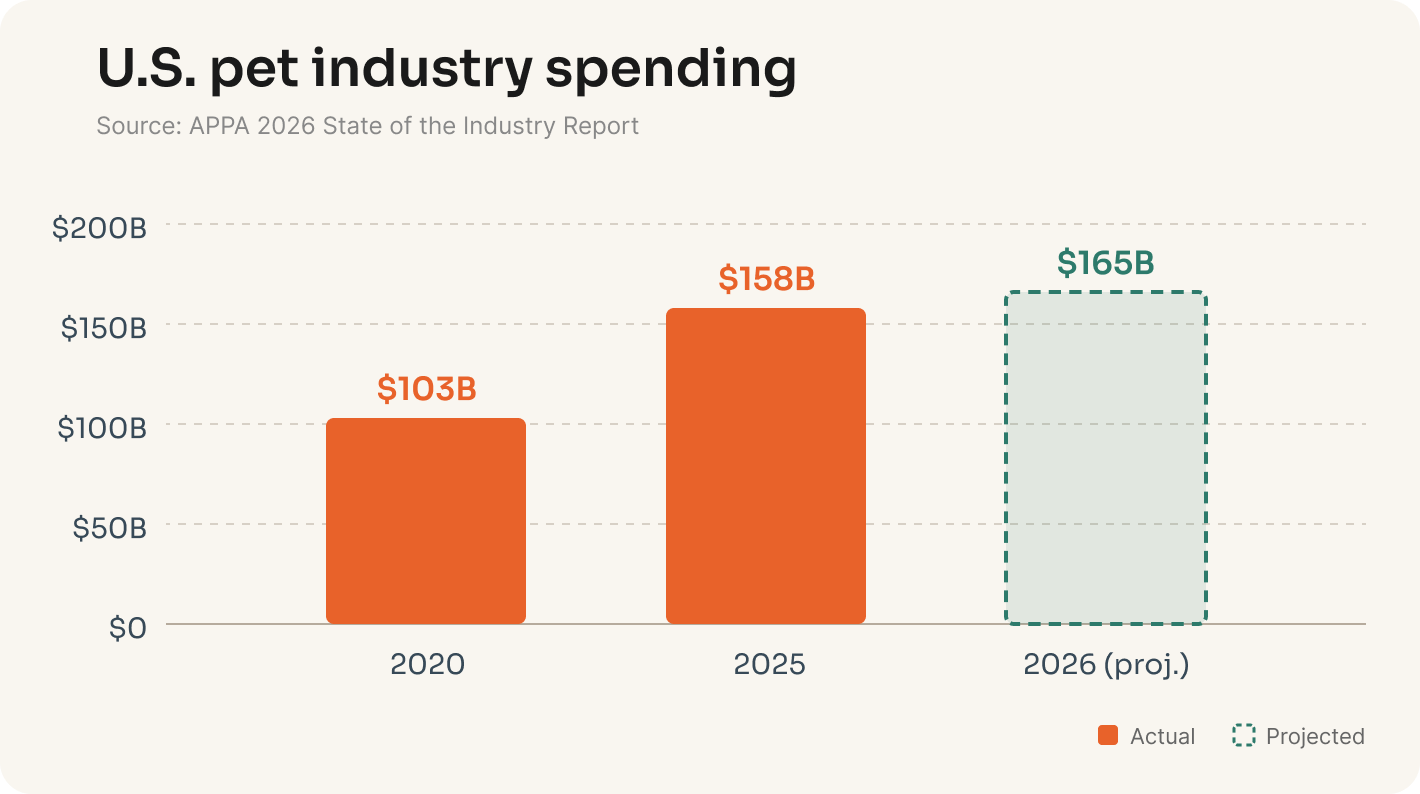
The American Pet Products Association puts total U.S. pet industry spending at $158 billion in 2025, up from $103 billion in 2020. They're projecting $165 billion by the end of 2026. For context, that's roughly the size of Portugal's entire economy.
It's a lot of money for a country to spend on animals. The interesting question is why.
-
A generation that chose pets over parenthood
The Harris Poll runs an annual study called "The State of Pets." In 2024, they asked 2,000 Americans whether they preferred having pets or having children. 43% said pets. Among Millennials and Gen Z, higher.
The reasons people gave weren't dramatic. Pets are easier to care for. Less financial pressure. More manageable responsibilities. These are practical answers, the same kind of cost-benefit thinking people apply to any major life decision.
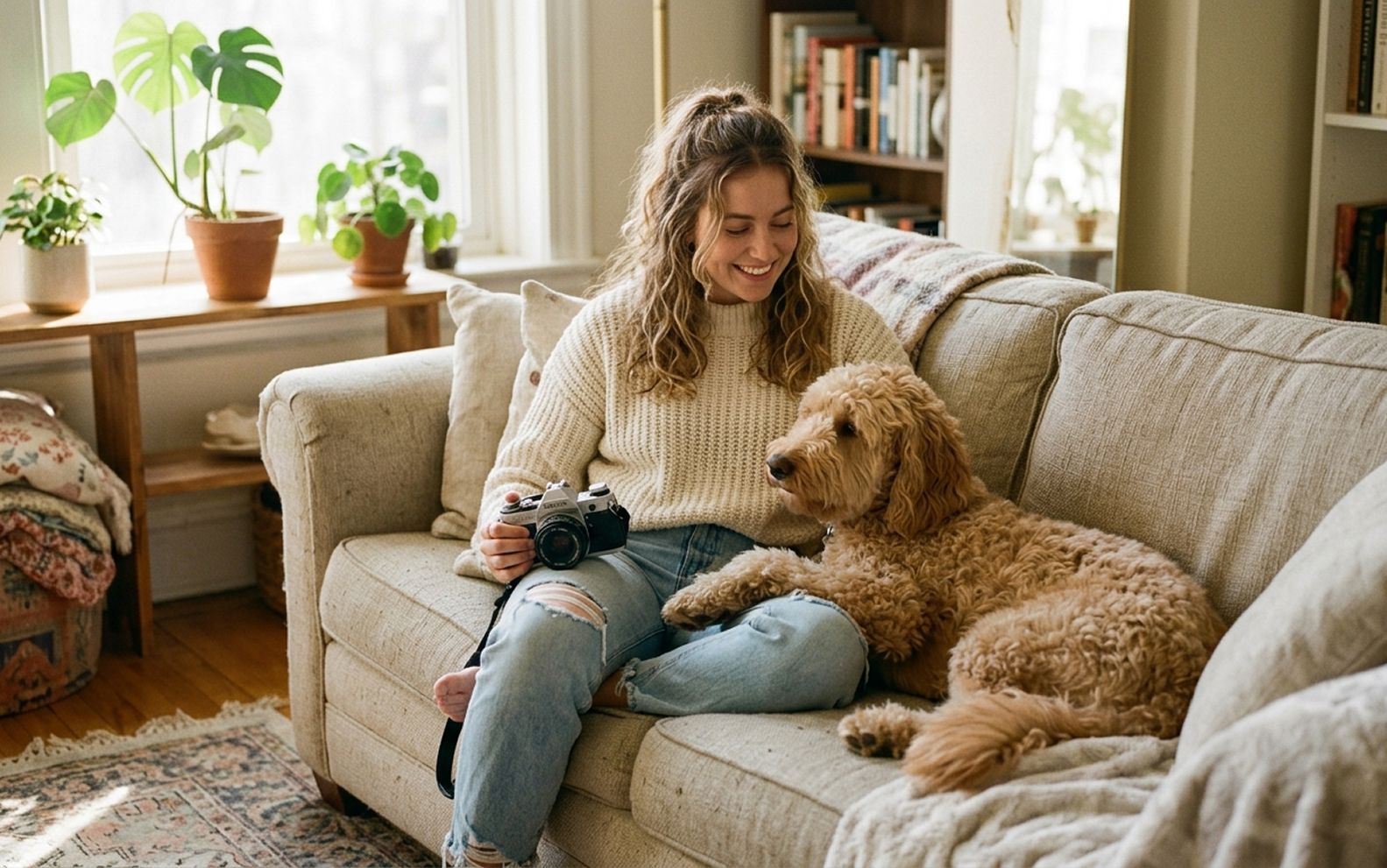
What's behind the number is a generational pattern researchers have been tracking for about a decade. Millennials delayed marriage, homeownership, and children at rates previous generations didn't. Some of the energy that would have gone into those things went into pets instead. The "fur baby" terminology isn't just cutesy, it maps onto real behavior. These owners talk about their animals the way parents talk about kids, worry about them the same way, and spend on them accordingly.
82% of pet owners in the Harris Poll described their pet as their own child. 63% said they would give up years of their own life to extend their pet's.
That's not a spending mindset. That's a family mindset. The spending follows from it.
-
The spending gap between generations
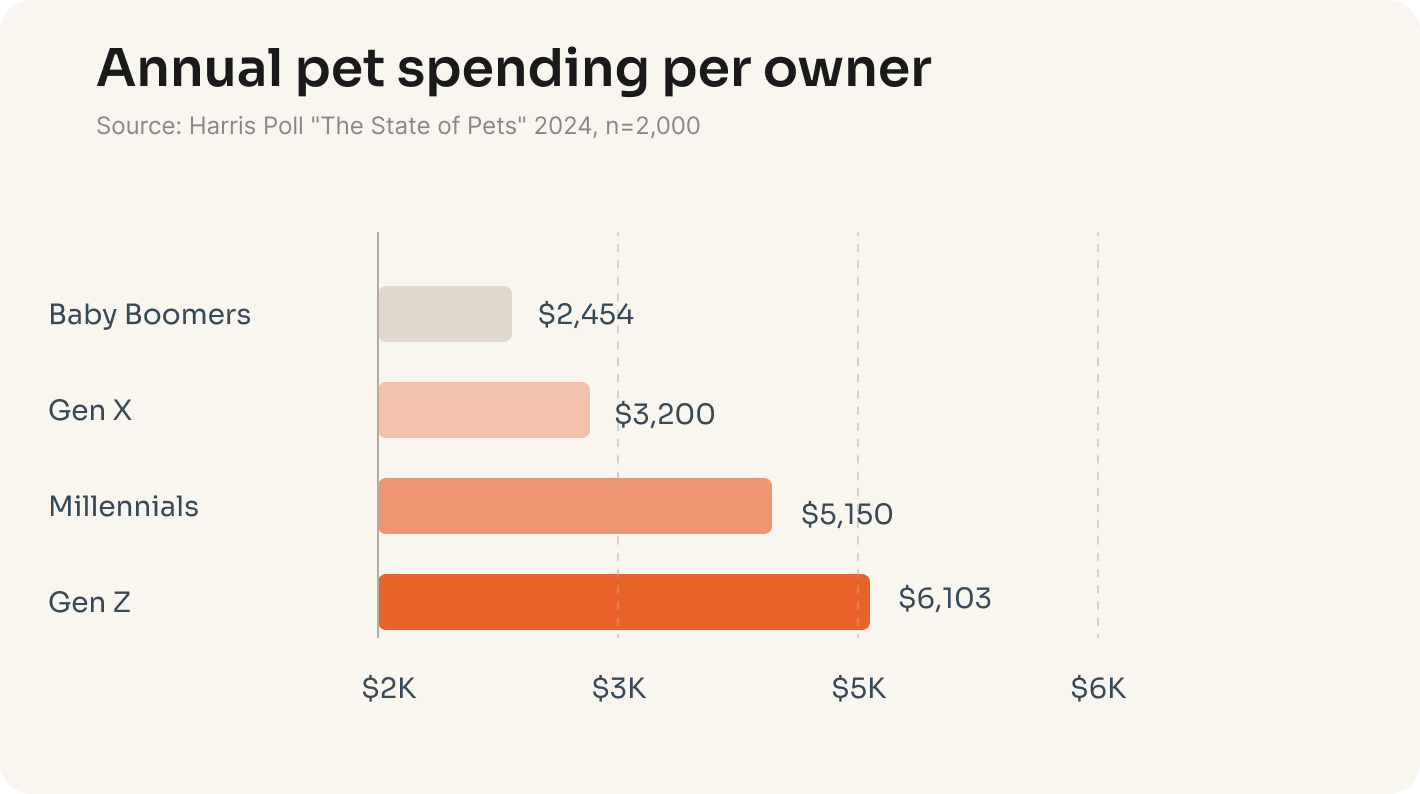
Gen Z spends an average of $6,103 per year on their pets. Baby Boomers spend $2,454.
That gap is wider than it looks. It's not just that younger people love their pets more, it's that they came of age with a different idea of what pet ownership even means. Premium food, regular vet checkups, insurance, enrichment toys, custom products. For a 26-year-old who grew up watching Instagram reels of someone's dog eating better than most humans, these aren't luxuries. They're just what you do.
The APPA's 2026 report, released in March, flagged something unexpected: Gen X had the biggest ownership growth of any generation last year, up 12% year over year. The explanation the researchers offered was the empty nest. Kids leave, and the house fills back up with pets. Often multiple species at once.
One in five Gen Z pet owners has a dedicated savings account for pet expenses. 57% of pet owners overall include their pet's needs in their long-term financial planning. These aren't impulse purchases. People are budgeting for this the same way they budget for rent.
-
The cat surge nobody predicted
Dogs still lead. 71 million U.S. households own one. But the cat numbers have been moving faster, and the story behind them says something about how American life is changing.
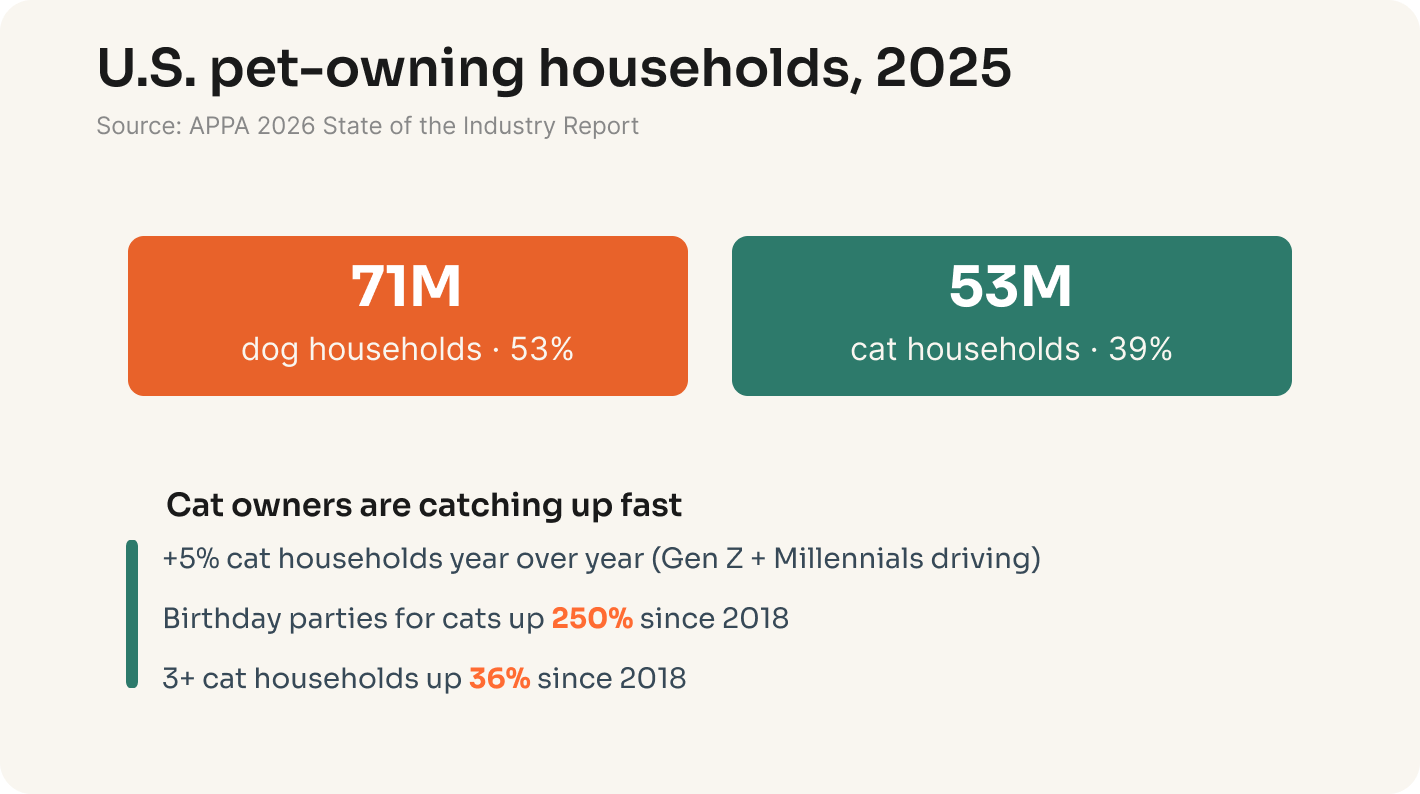
Cat-owning households grew from 46.5 million to 53 million in a single year, driven almost entirely by Gen Z and Millennials. The practical reasons are obvious once you say them out loud: cats work in apartments, they don't need a yard or a walker, they're compatible with the kind of life younger people are actually living in cities.
What surprised the researchers wasn't the ownership growth. It was what cat owners started doing after they got one. Birthday parties for cats are up 250% since 2018. Three-or-more-cat households grew 36% in the same period. Nearly half of cat owners now use some form of training with their cats, a 41% increase from six years ago.
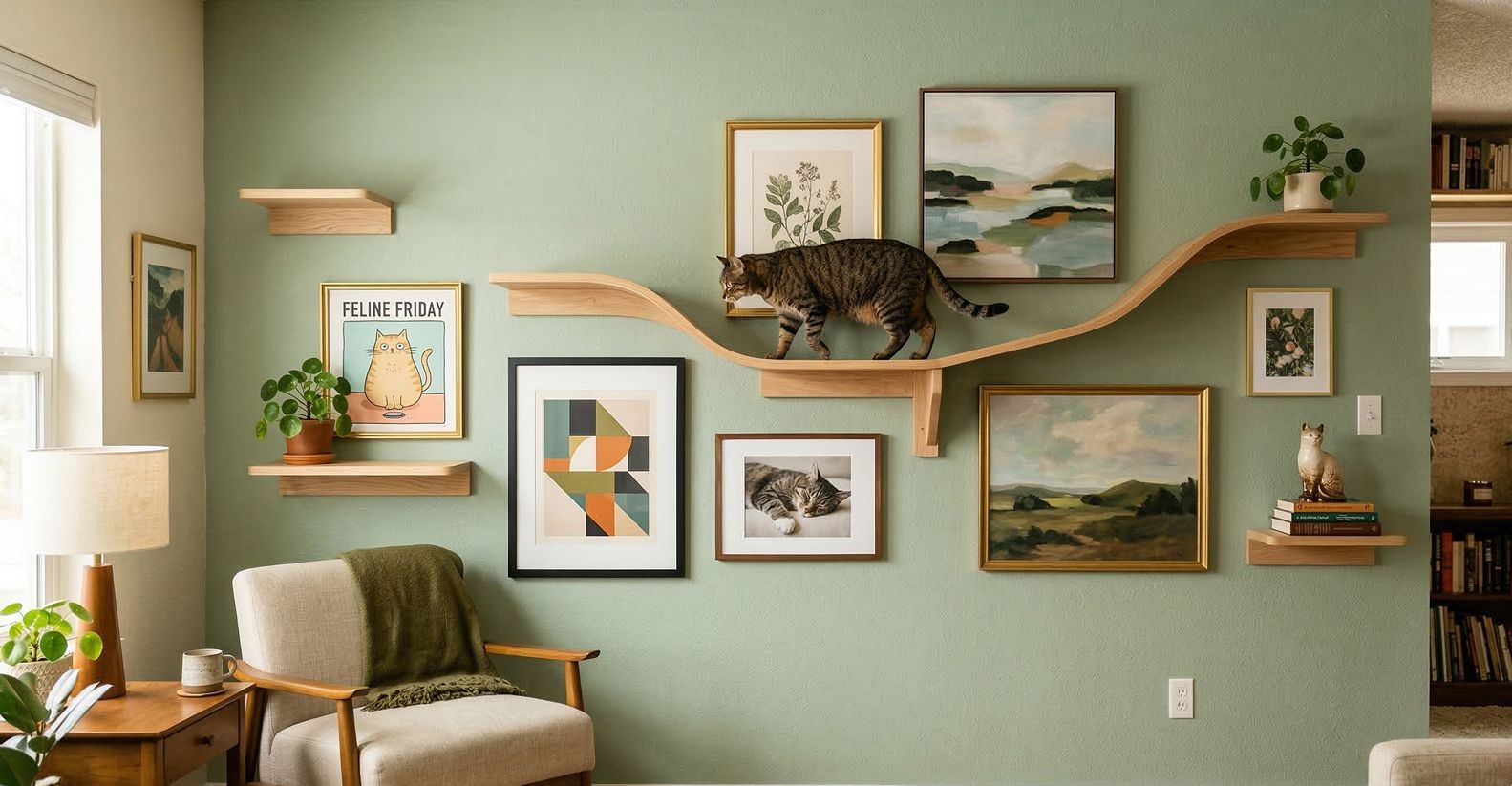
Cat people are, in other words, starting to act like dog people. The same level of investment, the same rituals, the same willingness to spend.
-
The one category that keeps surprising researchers
Food and vet care are the expected big numbers. But researchers keep noticing a category that doesn't fit the usual logic of pet spending: things people buy not because their pet needs them, but because of how those things make both the pet and the owner feel.
Call it emotional spending. A birthday cake the dog will inhale in three seconds. A dedicated corner of the living room with a cushion that costs more than the couch. A portrait on the wall that turns a Tuesday morning into a small moment of joy every time you walk past it.
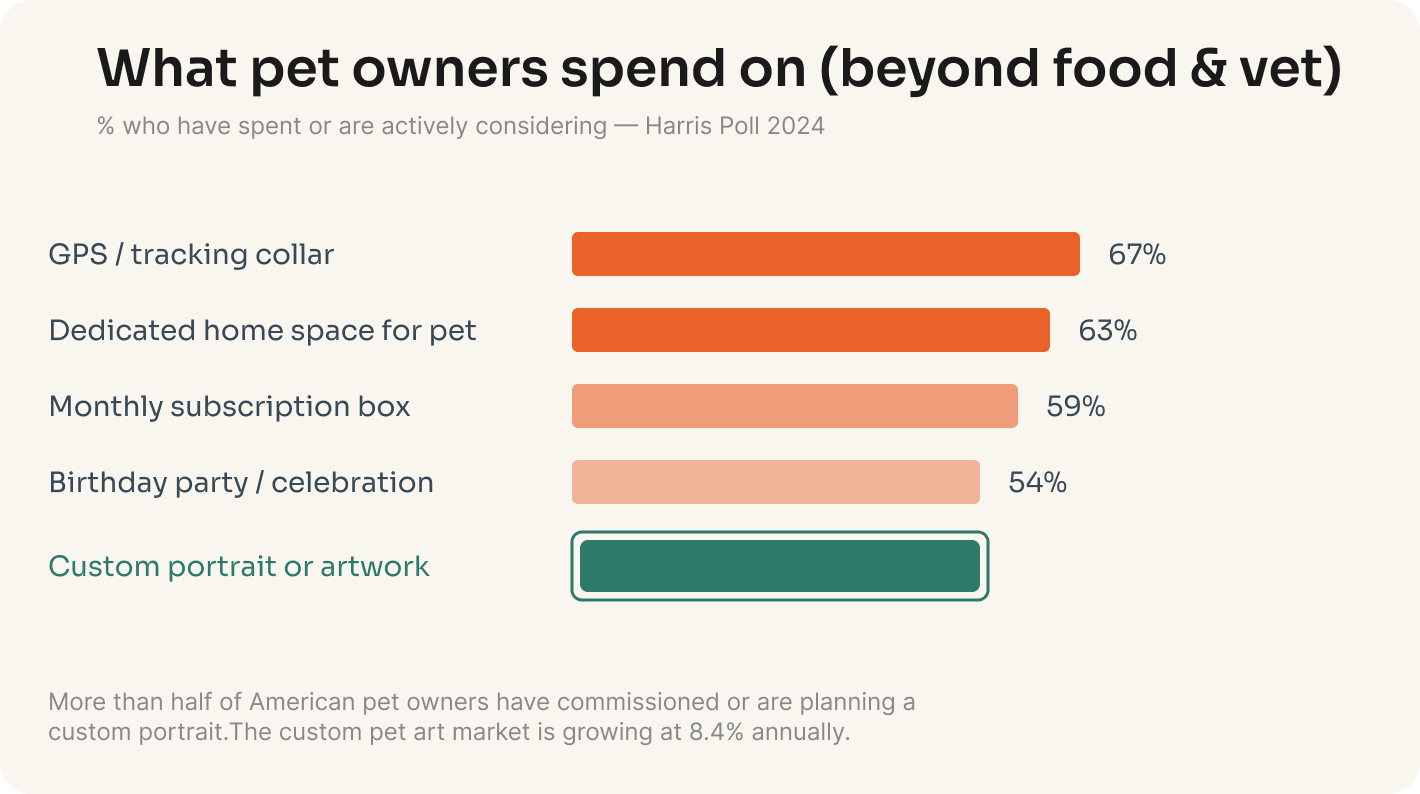
The Harris Poll asked about this directly. 63% of pet owners had designed a dedicated space in their home specifically for their pet. 54% had organized a birthday party or celebration. And 53% had already commissioned a custom portrait or piece of artwork featuring their pet, or were actively considering it.
More than half. That's not a niche.
-
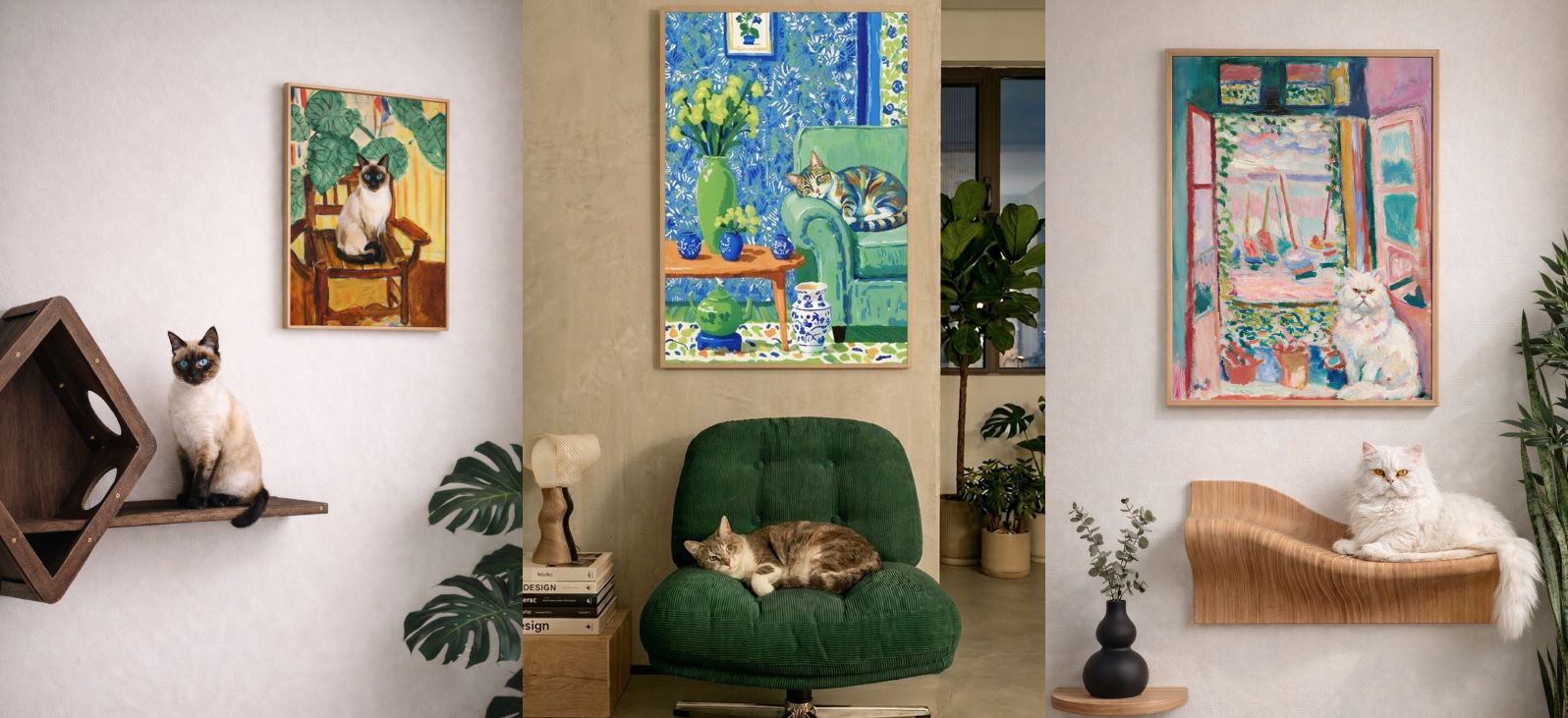
What that number reflects is something simple: the spending that brings the most lasting happiness tends to be the kind that creates something to live with, not just use. A good toy gets forgotten. A portrait of your dog, painted in the warm light of a French Impressionist afternoon, becomes part of how your home feels.
That's what we make at Pet-Art. Not merchandise, not a photo filter, not a product that ships in a poly mailer and gets forgotten in a drawer. Each piece transforms your pet’s photo into impressionist-inspired artwork, thoughtfully composed with expressive colors and painterly details.
Printed on textured canvas and finished with a wooden frame, it’s designed to feel like a natural part of your home. The kind of thing you point out to guests. The kind of thing your dog, sprawled on that expensive cushion beneath it, has absolutely no idea about, which somehow makes it better.
See our work and the styles we create or read about what impressionist style actually means for a pet portrait.