From the Edge of the Painting to the Center: How Pets Became Part of Art
Published: 8/13/2026
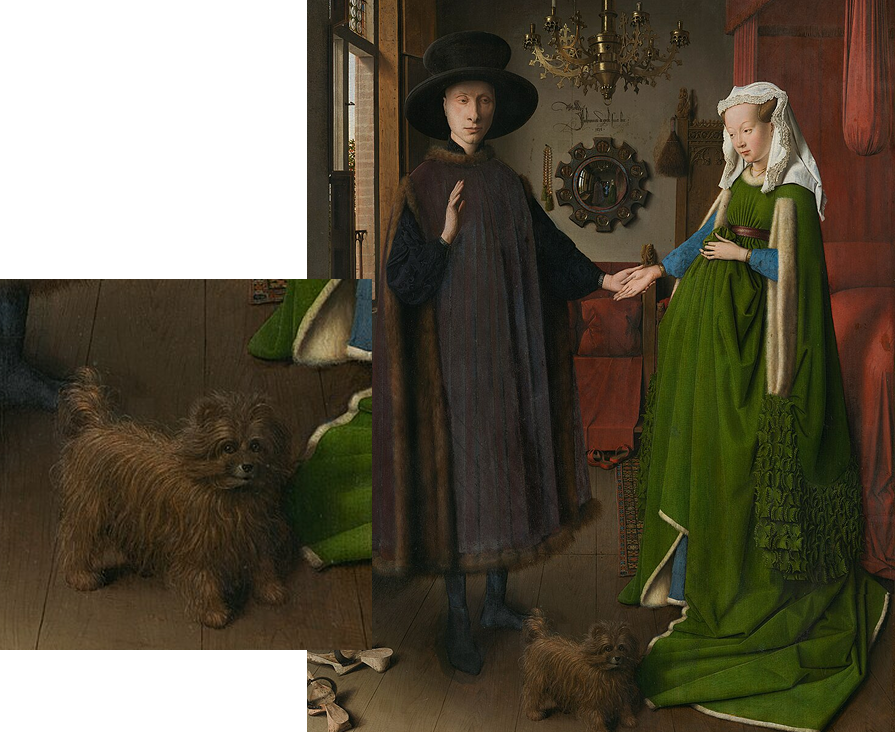
There is a small dog at the bottom of Jan van Eyck’s Arnolfini Portrait. I had seen the painting many times before I really paid attention to him. There is so much else to look at, the green dress, the chandelier, the convex mirror at the back of the room, that the dog is easy to treat as another detail in an already crowded painting.
Once I started looking for pets in paintings, though, I began seeing them everywhere.
They sit under tables, follow hunters through the countryside, curl up at the end of beds and appear beside children in family portraits. Sometimes they seem important; sometimes they look as though they wandered into the scene by accident. Eventually, especially as you move closer to modern art, the people sometimes disappear altogether. The pet gets the painting to itself.
I became interested in when that change happened. When did artists stop including dogs and cats mainly because of what they represented, and start becoming interested in the animals themselves?
When the dog was there to tell us something about the person
In earlier European paintings, dogs often carried meaning that contemporary viewers would have understood.
They could suggest fidelity or companionship, but they could also tell you something about the sitter’s social position and way of life. A hunting dog beside a man, for example, places him in a very different world from a small lapdog sitting beside an aristocratic woman.
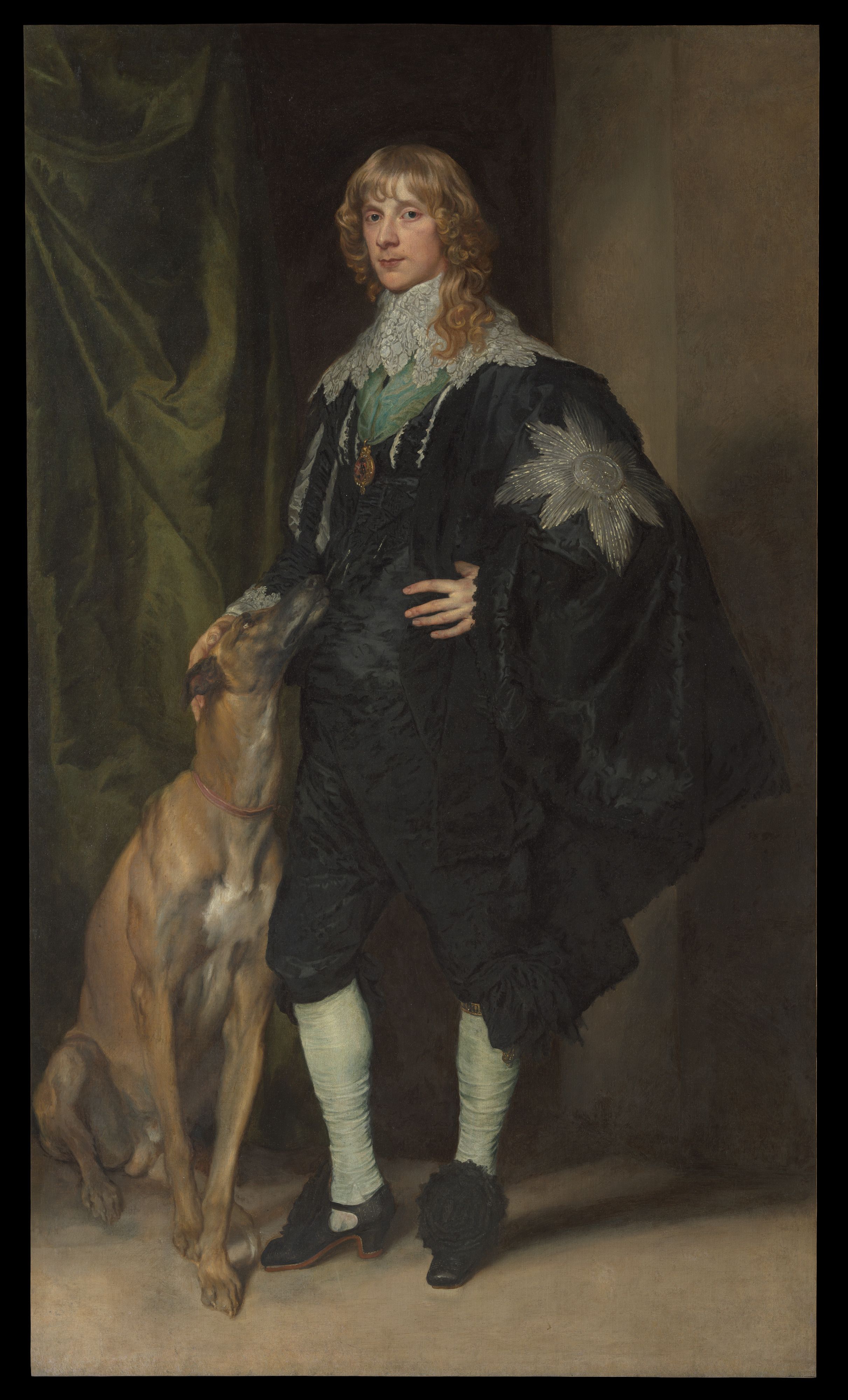
You can see that clearly in seventeenth-century portraiture. In Anthony van Dyck’s portrait of James Stuart, Duke of Richmond and Lennox, a large dog presses closely against the Duke and looks up toward him.
By the eighteenth century, however, some artists were paying much closer attention to the animals themselves. Anne Seymour Damer’s Shock Dog, made around 1782, is a life-size sculpture of a small Maltese looking upward as though waiting for its owner to speak or reach down.
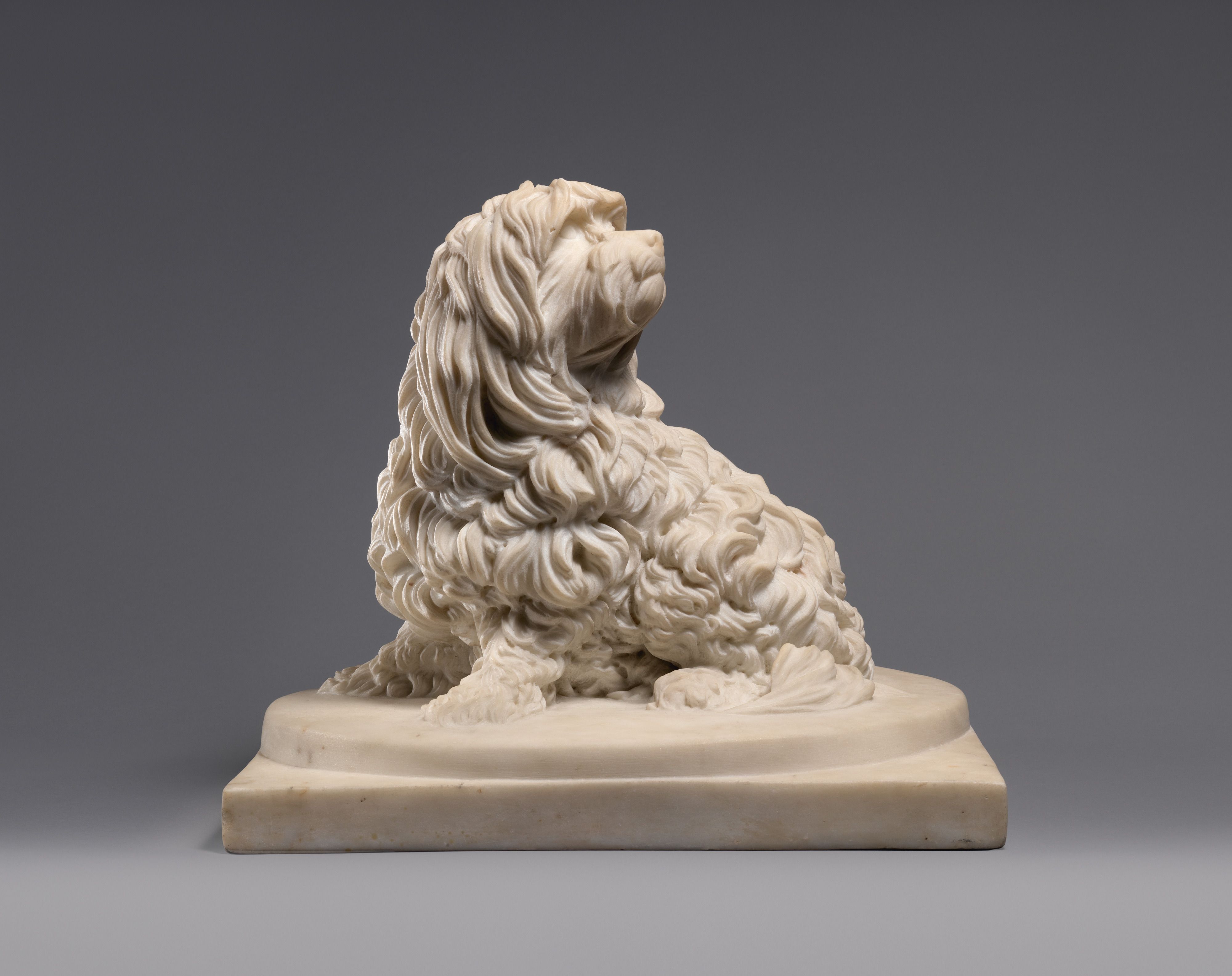
What changes when a pet gets its own portrait?
I find the development of pet portraiture particularly interesting because portraits are inherently personal objects.
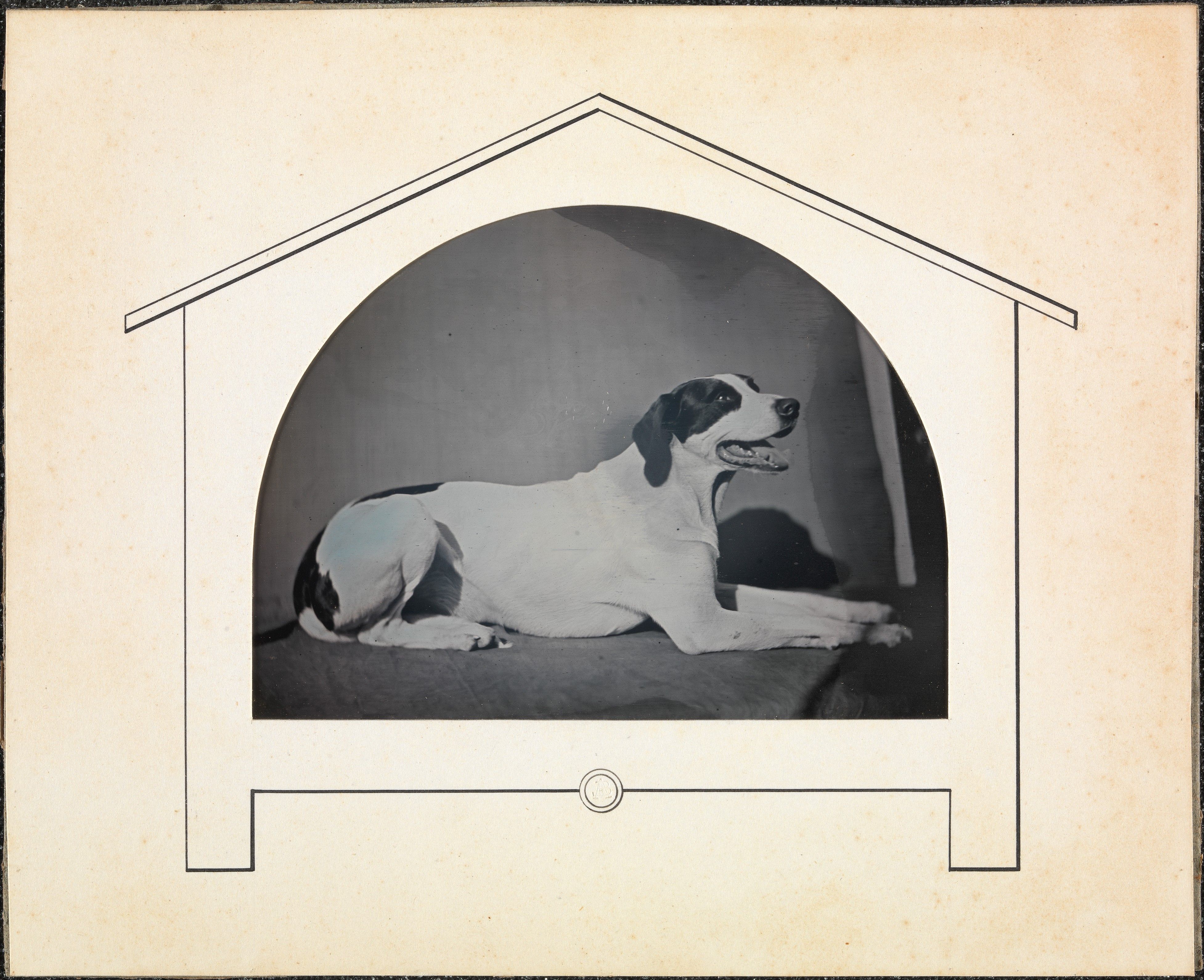
By the nineteenth century, dogs were increasingly being painted and photographed with the same kind of individual attention. One early daguerreotype in The Met’s collection, made by Louis-Auguste Bisson sometime between 1841 and 1849, shows a dog by itself, peering from what looks like a little doghouse.
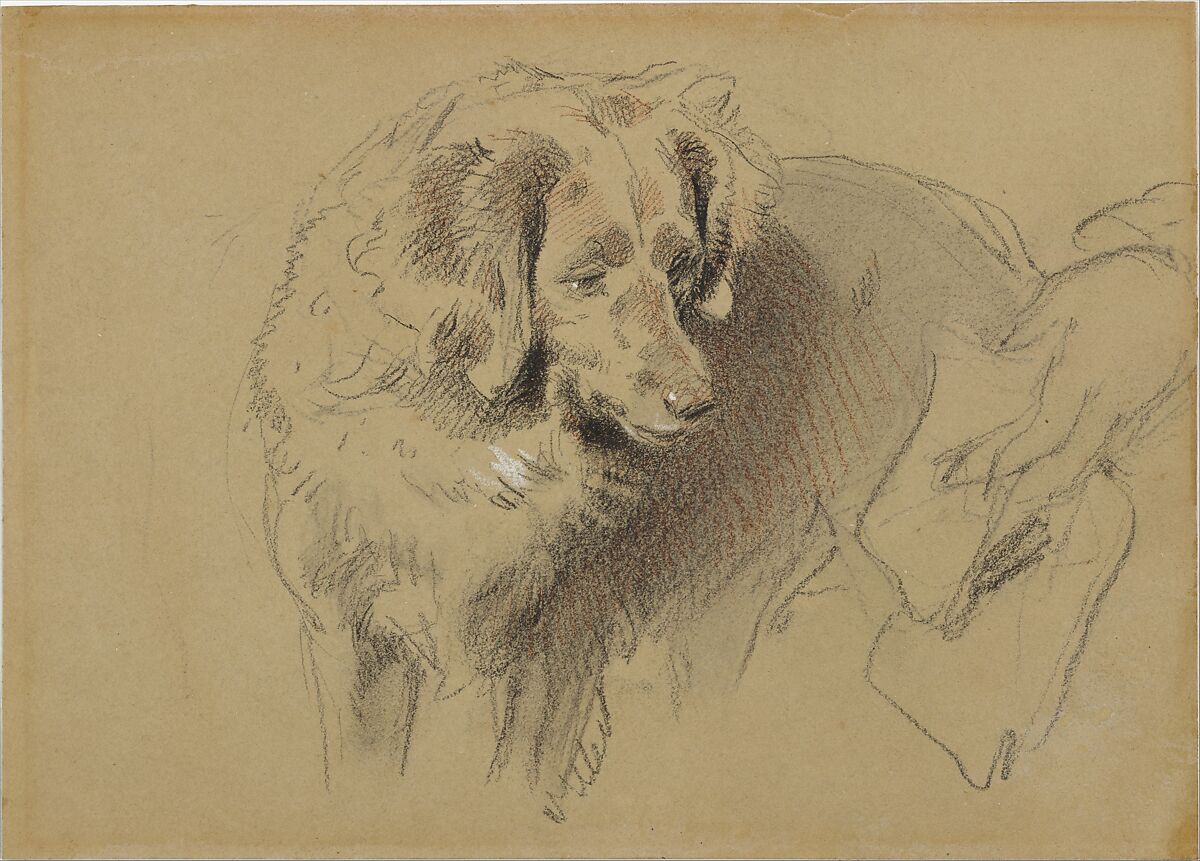
Painting was moving in a similar direction. Sir Edwin Landseer became famous for animals whose expressions and personalities often feel remarkably specific. Even in a simple chalk study of a dog’s head, you can see how closely he was looking.
Pets enter everyday life, and Impressionism
This is where the nineteenth century becomes especially interesting to me, because it overlaps with the art I naturally gravitate toward.
The Impressionists and artists around them were interested in modern life: gardens, cafés, apartments, leisure, family members and seemingly unimportant moments at home. Pets fit comfortably into that world because they were already part of those spaces.
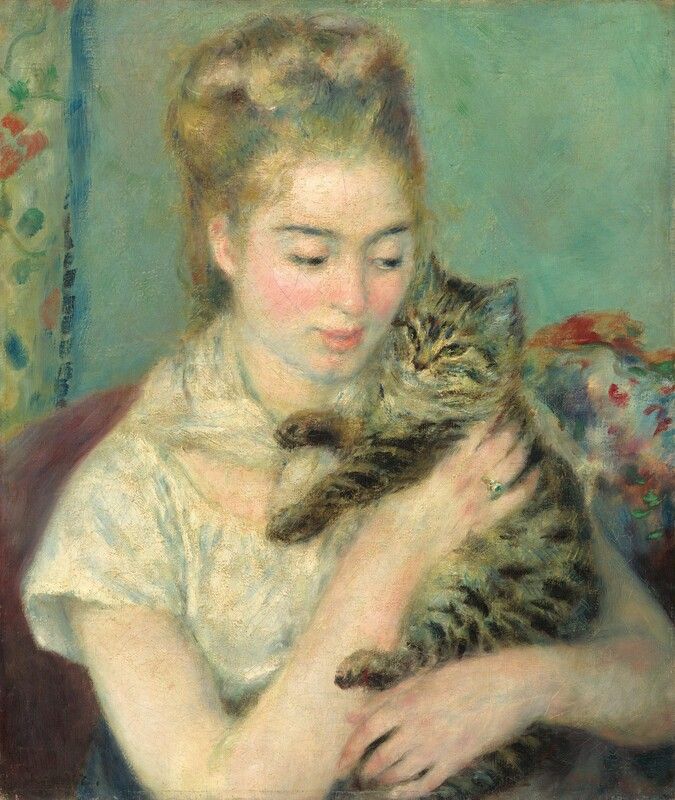
Renoir’s Woman with a Cat, painted around 1875, is a good example. A woman sits in an armchair holding a striped cat close to her face. There isn’t much narrative to decode. The intimacy comes from something very familiar: the slightly awkward physical negotiation involved in trying to cuddle a cat.
Édouard Manet’s Tama, the Japanese Dog, from around 1875, goes a little further. There isn’t a person in the painting at all. Tama stands alone in a room, turning his head toward something outside the frame. His name is painted directly onto the canvas in capital letters. The brushwork is loose enough that his fur almost dissolves into individual strokes, but his alert expression is unmistakable.
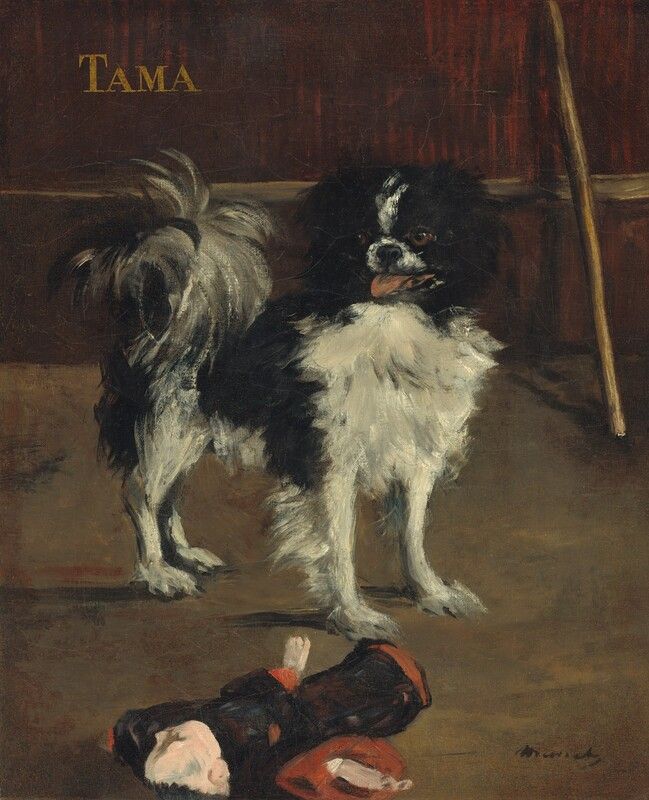
I like Tama partly because it doesn’t require much explanation. It is a portrait of a dog named Tama.
I love Impressionism for its brushwork and color, but also for the attention it gives to ordinary moments. Light falling across a room can be enough of a reason to paint it.
It’s also part of the thinking behind some of the work at Pet Art. When I started experimenting with putting pets into Impressionist-inspired settings, I wasn’t particularly interested in recreating historical paintings exactly. What interested me was whether a pet could feel as though it genuinely belonged in that painted world, the same way it belongs naturally in our homes and photographs today.
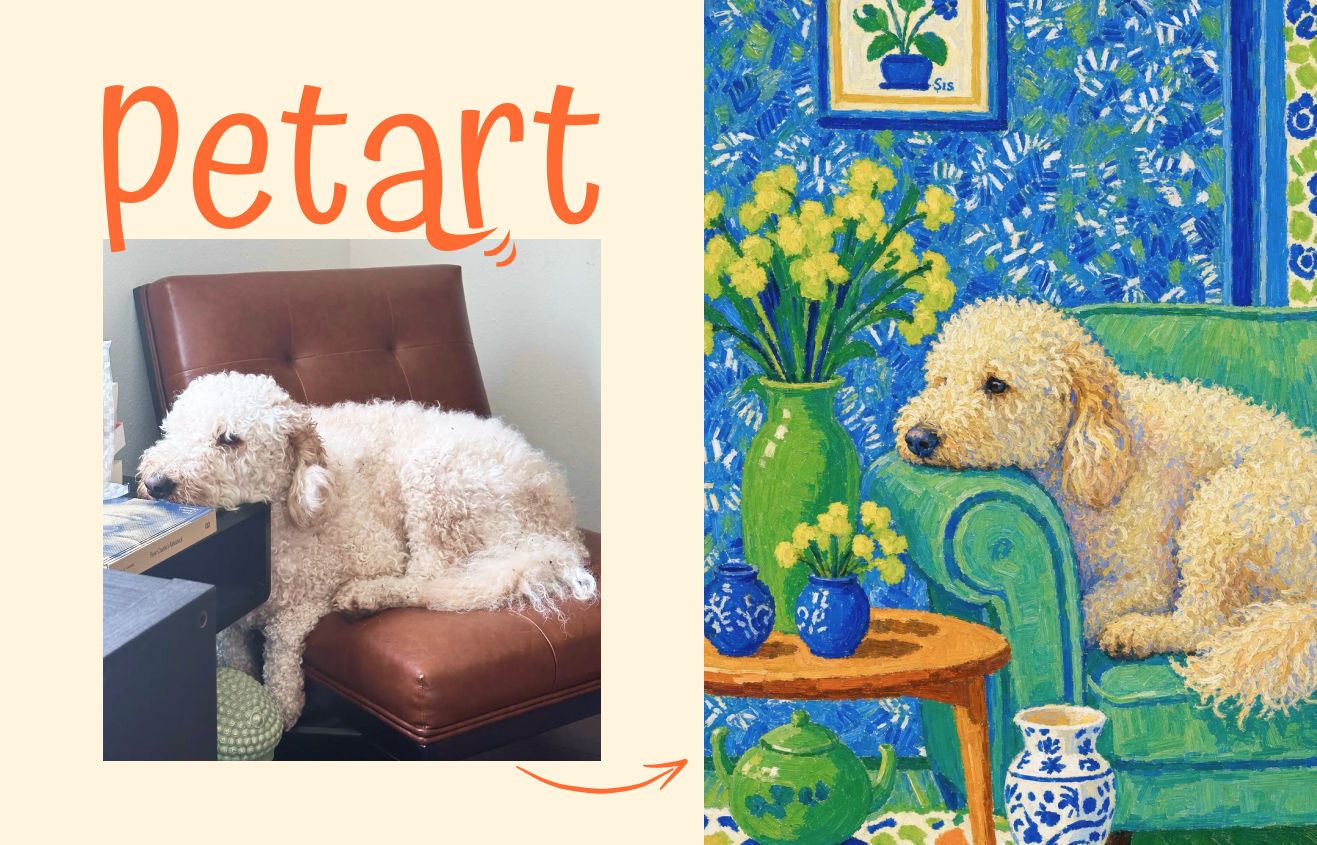
Love the loose brushwork and everyday intimacy of Impressionism? Explore how Impressionist art inspires our approach to pet portraits → Read more about Impressionist
Hockney’s dogs don’t need to do anything
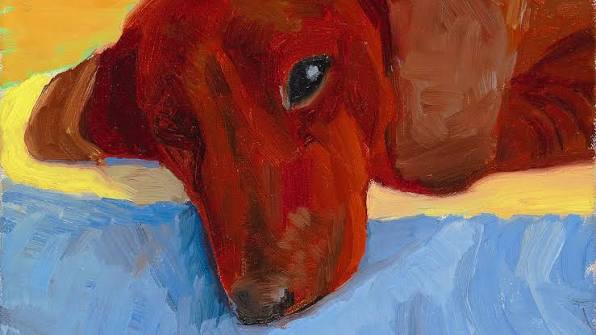
In the mid-1990s, Hockney repeatedly painted his two dachshunds. They appear sleeping together, curling around cushions and occupying the strange positions dogs somehow find comfortable.
What I like about these paintings is how little Hockney asks the dogs to do. There doesn’t need to be an event. Their familiar positions are enough material for repeated observation.
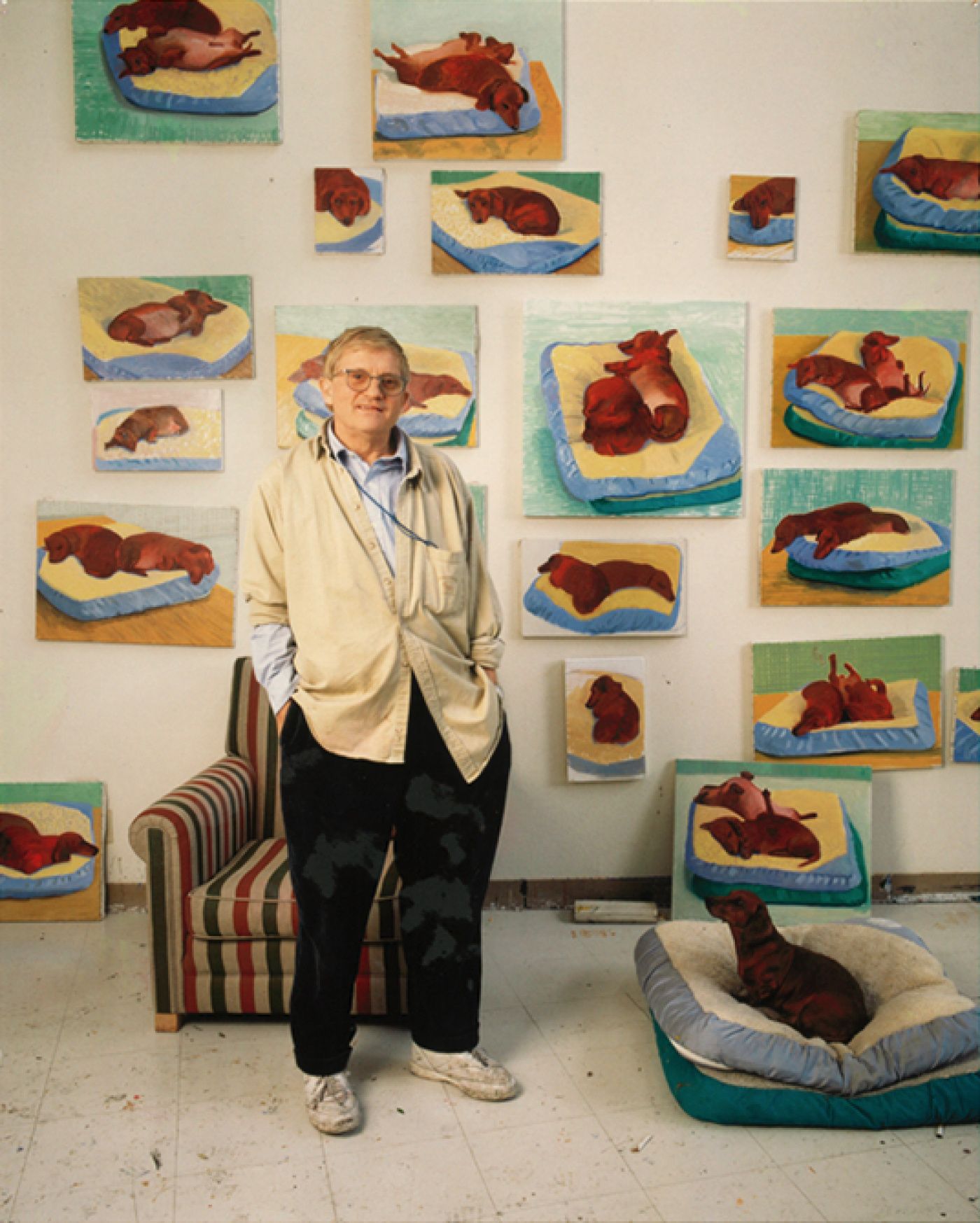
That feels very close to the experience of living with a pet. You end up seeing the same animal in roughly the same places every day, yet somehow there is always another photograph on your phone. The attraction isn’t novelty. It’s familiarity.
Cats followed a somewhat different path in Western art, carrying associations ranging from domesticity and sensuality to independence and mystery. But by the nineteenth century, they too were increasingly appearing as familiar companions rather than symbols that needed to be decoded.
Renoir’s cat feels especially modern in that sense: it doesn’t have to represent anything. It can simply behave like a cat.
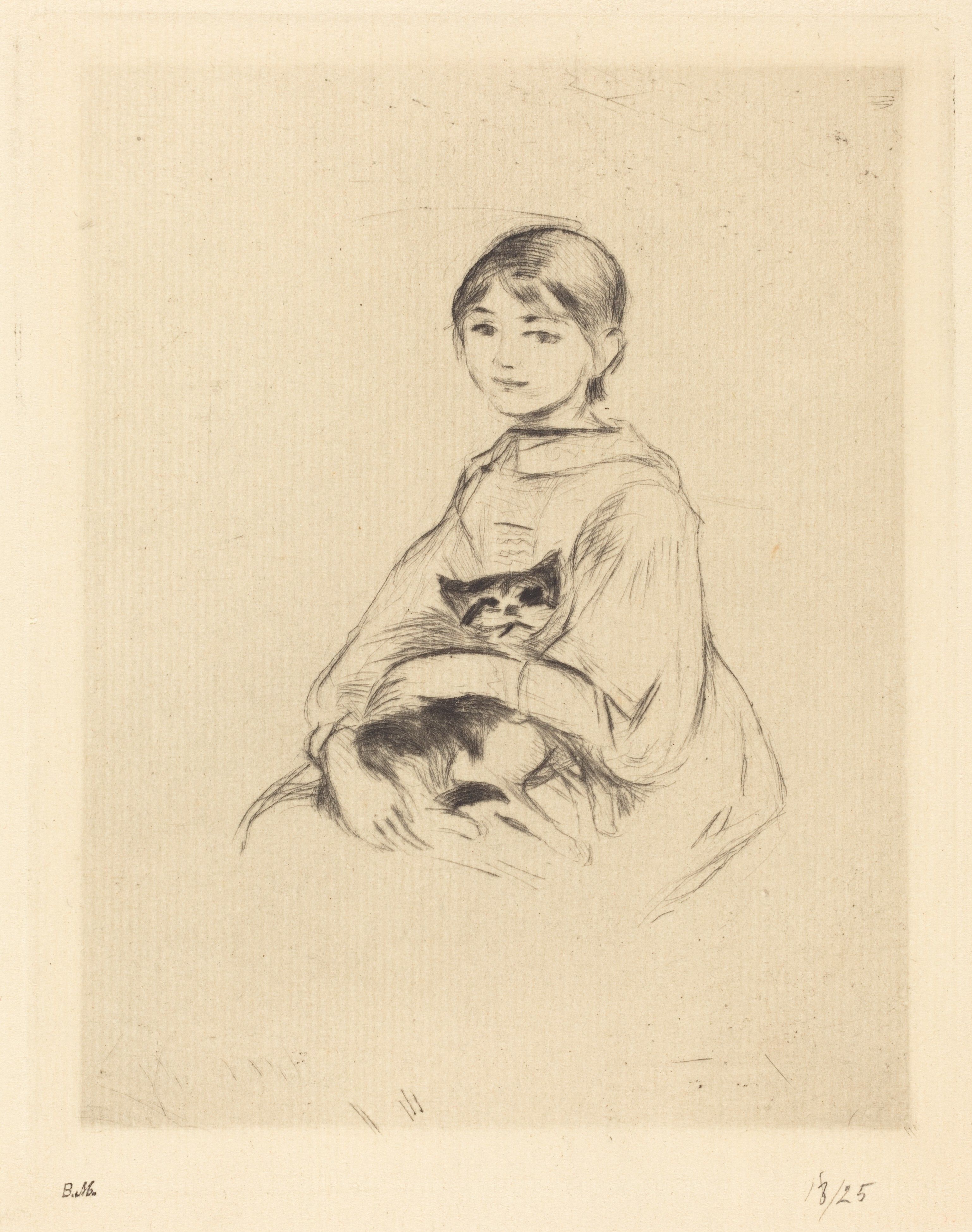
Why do we still want portraits of our pets when we already have thousands of photos?
This was the question I kept coming back to while researching all of this.
Today, most of us already have an absurd number of photographs and videos of our pets. I certainly don’t need another image of Miumiu.
Miumiu is my Goldendoodle, and he was part of the reason I started experimenting with Pet Art. After he came into my life, I noticed that he kept entering my creative thinking even when I wasn’t intentionally trying to make work “about dogs.”
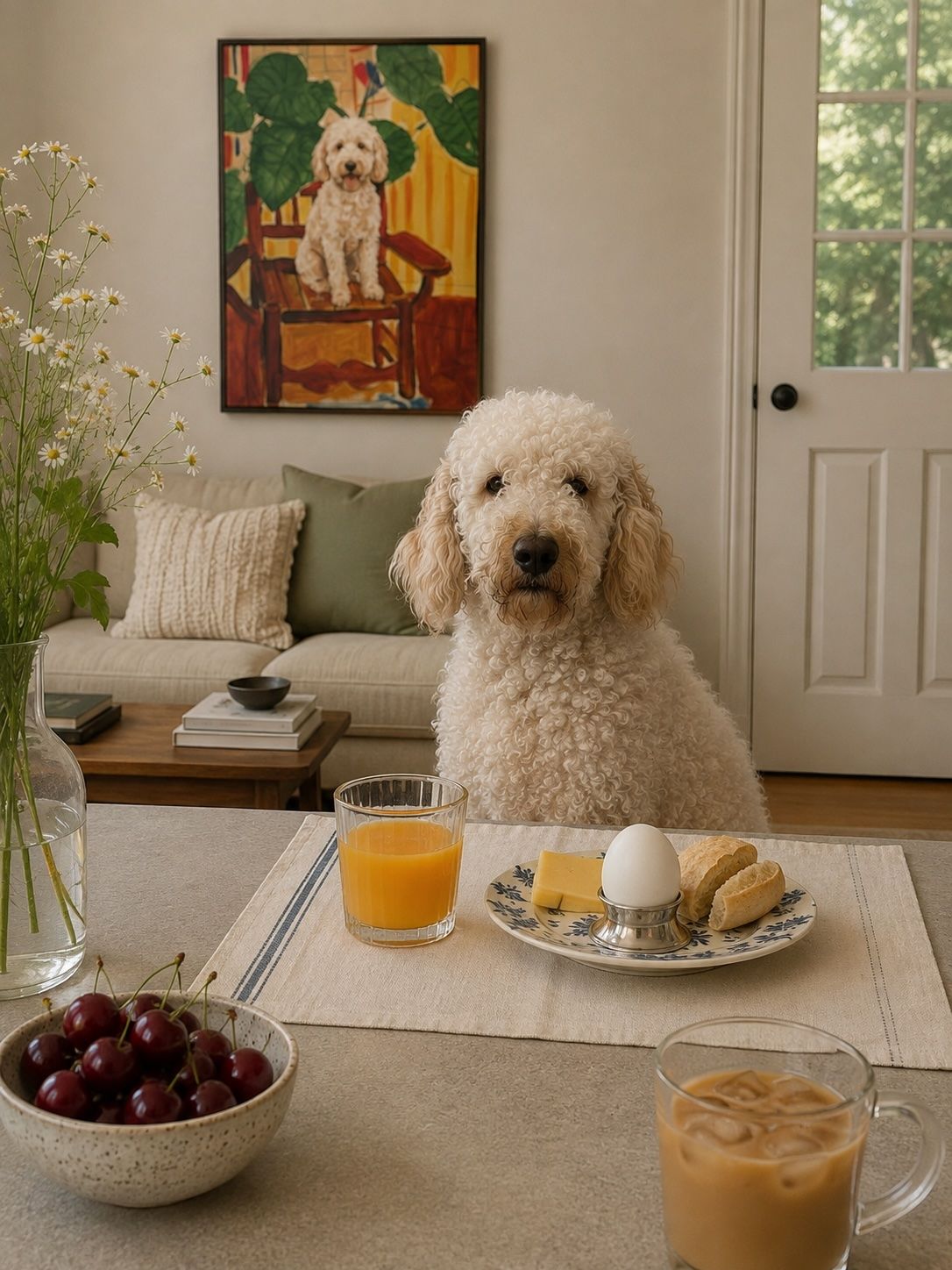
Sometimes it was something as simple as noticing his reflection while he ran across wet sand, or the way late-afternoon light changed the shape of his fur. Other times, I would look at a painting I already loved and start wondering what it would feel like if Miumiu existed somewhere inside it.
Looking through centuries of pet portraits has made that idea feel less contemporary than I originally thought. Artists have been negotiating this question for a long time. How much of the animal is symbol, how much is personality, and how much comes from the relationship between the person making the image and the animal being observed?
The answers keep changing because our relationship with pets keeps changing too.
Perhaps that is why pet art can still feel different from another photograph in the camera roll. We already have hundreds, sometimes thousands, of photos showing exactly what our pets look like. What interests me about making artwork from them is the chance to imagine them differently, to place a familiar face inside a new atmosphere, a different artistic style, or a world it has never belonged to before.
The point isn’t to replace the photograph. It’s to start with something familiar and see where else it might belong, sometimes in an imagined painted world, and sometimes simply on the wall of the room you share with them.
If you’re thinking about bringing pet art into your own space, here’s our guide to styling pet art in the living room → How to Style Your Living Room with Pet Art